A photo and a video
You send the reference photo — the ID card one, say — and a short video of the face, and we answer whether it is the same person.
Send the ID photo and a short video of the face, and it answers whether it is the same person and whether they are live, with the tolerance you define. It stores neither the photo nor the video: it processes in memory and discards.
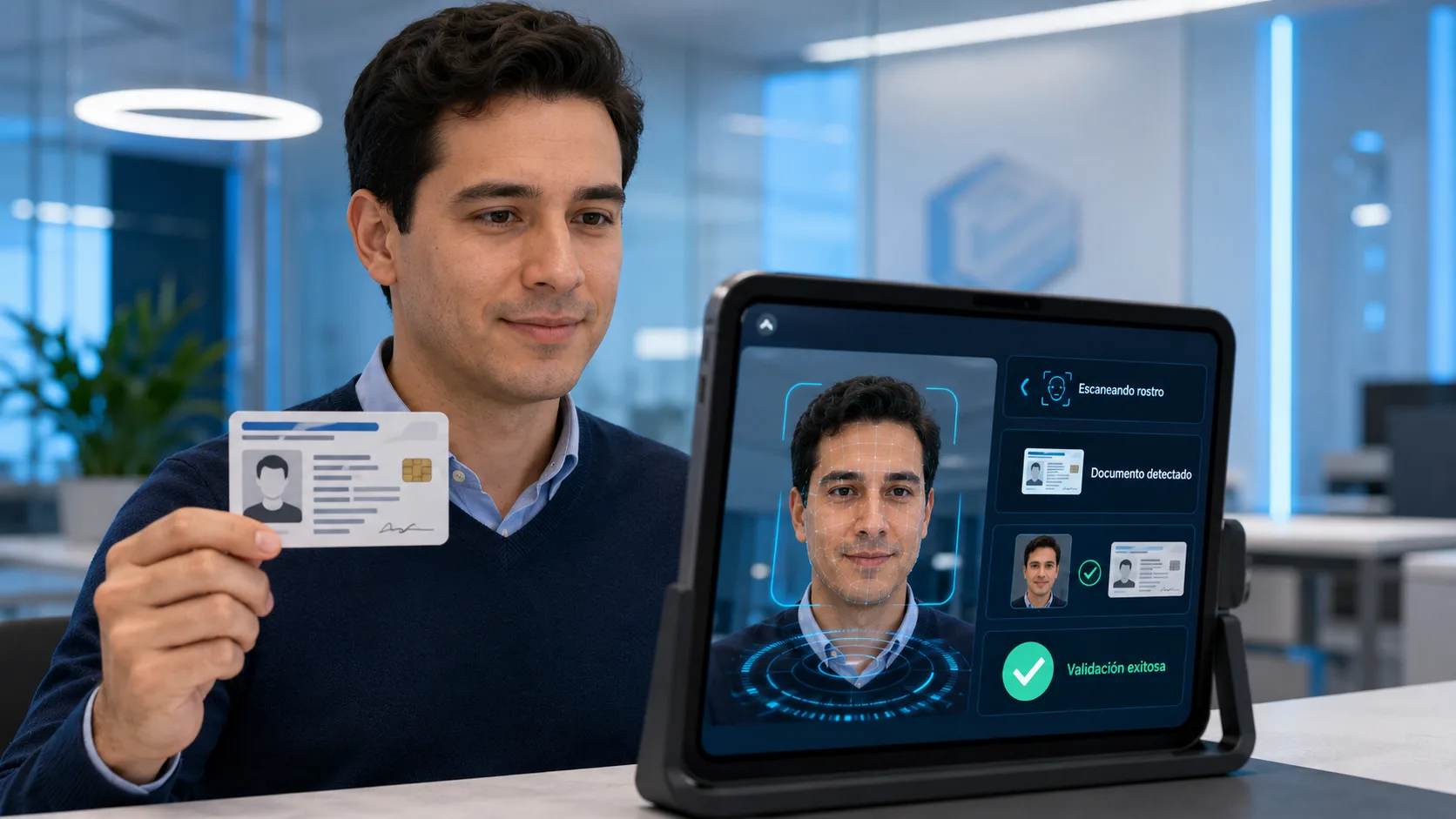
Comparing two faces is the easy part. The hard part is knowing there is a person on the other side and not a photo of a person held up to the camera. That is why the video is not a whim: it is what rules out spoofing.
All in one system
You send the reference photo — the ID card one, say — and a short video of the face, and we answer whether it is the same person.
Frames are sampled from the video and passive anti-spoofing runs on them: a photo of a photo does not get through.
The threshold travels in the request, or your account's configured one is used. A bank and a gym do not need the same strictness.
Your system acts on `valid`: same person, and alive. Score and liveness are returned separately, for your traceability.
Each consuming application is an account with its own key and its own default tolerance.
If there is no face or the file is unreadable, it answers with a clear error. No face means an error, not a false match.
Why this one
Everything is processed in memory and discarded on answering. Only metadata is kept for auditing — account, score, result and date — never images or biometric features.
One call with the key in a header and the files in the form. No SDK.
It was built to be reused: any system that needs to verify identity consumes it the same way.
Who it's for
Biometric data is sensitive data in both Chile and Costa Rica. A service that never stores it cannot leak it, and takes your system out of the problem entirely.
Frequently asked
No. Everything is processed in memory and discarded on answering. Only metadata is kept for auditing: account, score, result and date. Never images or biometric data.
With passive liveness detection over the video frames. The final result requires both: same person, and alive.
Yes. The tolerance is sent with each request or configured as your account default.
It answers with a clear error. We prefer an error over an invented match.
One call with your key in the `X-API-Key` header and the files in the form. Interactive documentation is published by the service itself.
Tell us the use case and the volume. It is contracted through the form and we hand over the key with the documentation.